Topic
Presence & Body Language
Your body shapes your mind. The science is unambiguous — and the implications are profound.
Most of us think about communication as something we do with our words. But decades of research tell a different story: the most powerful signals we send — to others and to ourselves — come from the way we hold our bodies.
My research on nonverbal behavior shows that expansive, open postures don't just make us look more confident — they change how we actually feel. Adopting an open, expansive posture reliably increases our sense of power and confidence, shifting how we think and how we perform when the pressure is on.
My 2012 TED Talk, now one of the most-watched in history, introduced millions of people to the idea that small physical adjustments can produce real psychological shifts. Not as a trick to fool others, but as a way of reconnecting with your own sense of power when you need it most.
What the research shows
Key insights
The body-mind feedback loop
We assume our emotions drive our posture — we feel confident, so we stand tall. But my research shows the causal arrow runs both ways. When we adopt expansive postures, we send our brains a signal that shifts our psychological state — how powerful and capable we feel — before a single word is spoken.
Two minutes can matter
In high-stakes situations — before a job interview, a difficult conversation, a performance — a brief period of deliberate physical preparation can meaningfully change how we feel and how we present ourselves. Not as a trick, but because body and mind are a single system: posture genuinely shapes psychological state.
Power is expressed nonverbally first
In every culture studied, dominant individuals take up more space. They spread out. They occupy the room. And those who feel powerless do the opposite — they contract, cross their arms, make themselves smaller. These patterns are universal, and they're deeply tied to our sense of status and belonging.
Authenticity, not performance
This isn't about faking confidence for an audience. It's about using your body as a tool to access psychological states that are already available to you. The goal is presence — showing up as your actual self — not a polished performance of someone you're not.
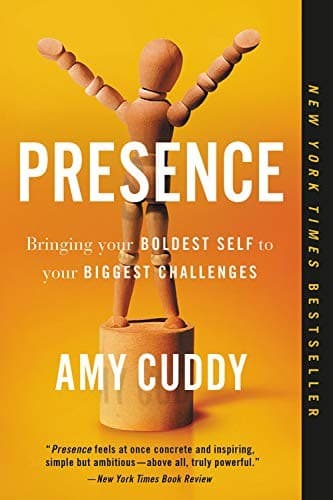
New York Times Bestseller · 35+ languages
Stop performing confidence.
Start feeling it.
Presence takes the science of body language and power out of the lab and into the moments that matter most — job interviews, difficult conversations, performances, and everyday interactions.
Get the BookGo deeper
Related resources
Stay Connected
Get my latest research and writing
New insights on presence, power, and what the science actually says — delivered directly to your inbox.
The Pathological Optimist — free to read. No spam, unsubscribe any time.